


Vietnamese food in the US now and then
"Phở is what Vietnamese eat, so where there are Vietnamese, there exists Phở."
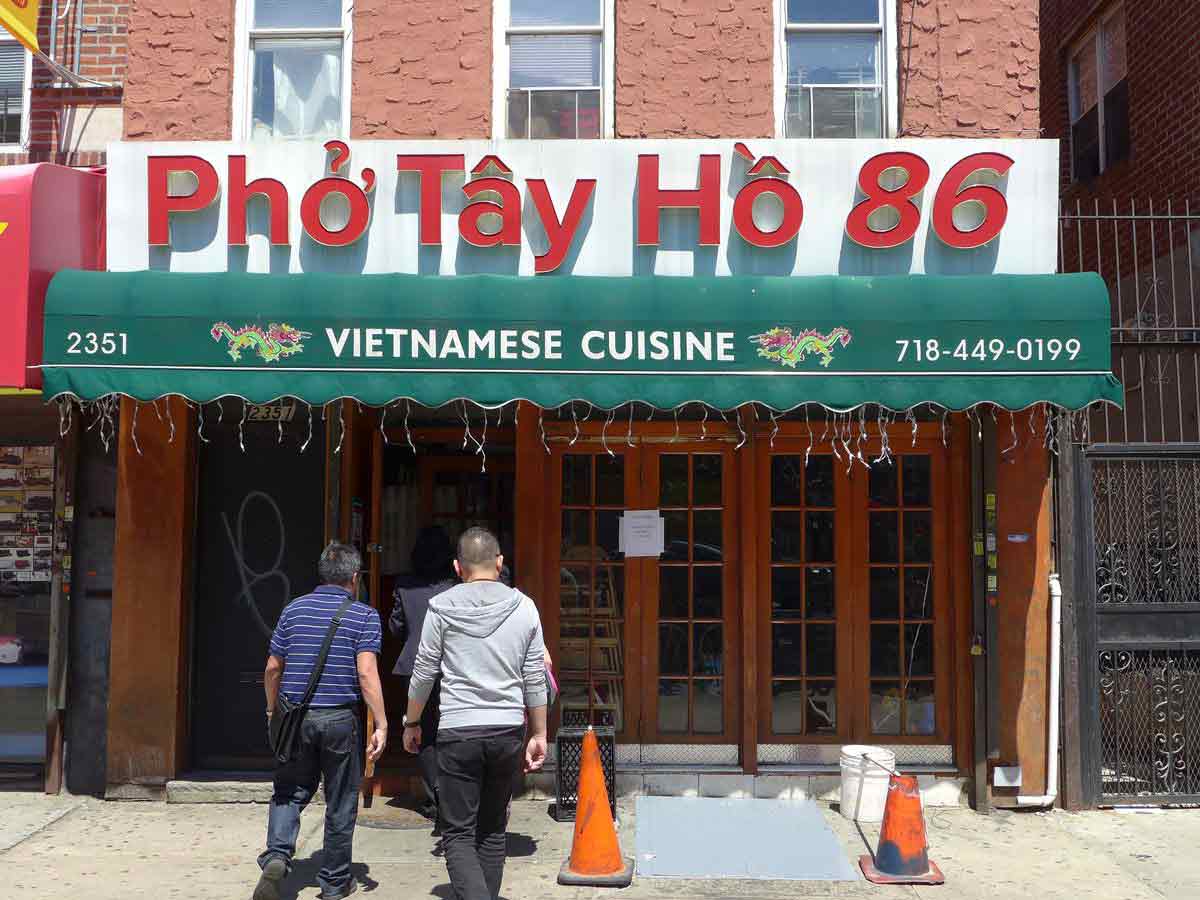
Because the memories of loss were still fresh, Americans initially detested South Vietnamese immigrants. A 1975 poll found that only 36% of Americans supported Vietnamese immigration. The US administration, however, informed the public that it believed it had a moral commitment to the refugees. Both President Gerald Ford and Congress agreed to adopt the Indochina Migration and Refugee Act in 1975, which granted Vietnamese refugees’ special status in the United States while providing them with $405 million for support in relocation of Vietnamese refugees. To prevent ethnic enclaves and to reduce their impact on local communities, the refugees were dispersed across the country, although many of them finally still settled in California and Texas within a few years (Wieder 165-173).
In 1979, when The Classic Cuisine of Vietnam and Jacques Penn’s article “Vietnam’s Distinctive Food” on The New York Time were published, the Vietnamese community was starting to form and grow larger in California and Texas while the Viet refugees’ group was still relatively small in New York. Coming to a new country and leaving everything that was familiar to them behind, the Viet refugees found themselves lost in the big country and food was how they found comfort and their identity. However, at the beginning, it was rather challenging to find the ingredients needed to recreate the flavor of Viet food in the U.S. Therefore, most of the time, Vietnamese people would come to the Chinese market to find the ingredients they need to cook food from home. Later on, Vietnamese people could find more Vietnamese ingredients in local Asian market as imported products from Vietnam grew. Now that the ingredients issues had been resolved, Phở restaurants started to sprout in neighborhood with large Vietnamese communities.
The rise of popularity of Phở
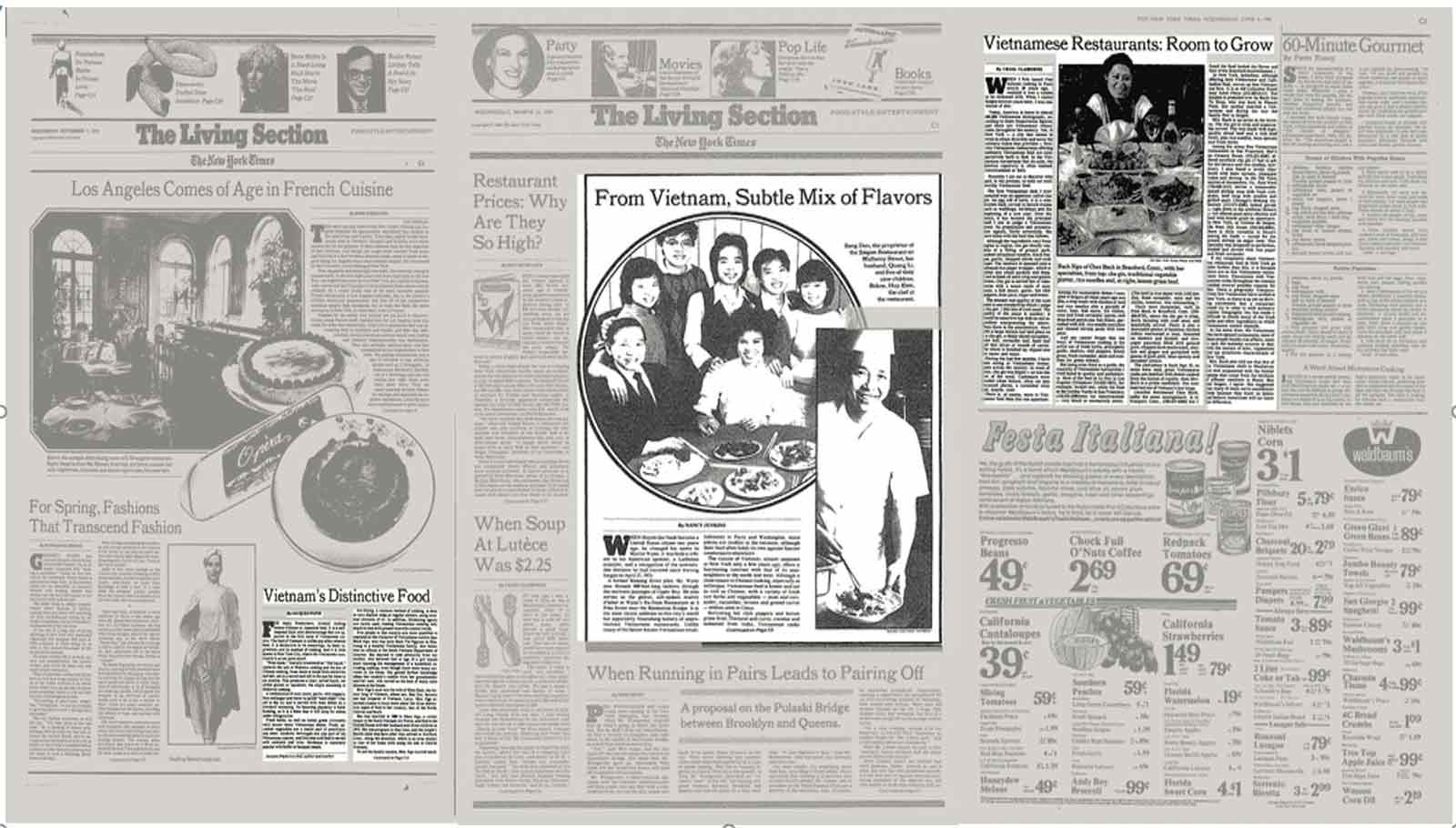
Phở restaurants were not only enjoyed by Vietnamese but also by American soldiers who had had the chance to try Phở when they stationed in Saigon during war. They savored the heartiness, uniqueness and complexity in the flavor of Phở, so not only did they regularly visit the Phở restaurants in Little Saigon in Southern California themselves but also introduced them to their friends and family (Huynh). During this period, Vietnamese food also received more attention from the publicity thanks to some articles published in the New York Times, including “Vietnam’s Distinctive Food” by Jacques Penn in 1979, “From Vietnam, subtle mix of flavors” by Nancy Jenkin in 1984, and “Vietnamese restaurants: room to grow” by Craig Claiborne in 1986. To explain the growth of popularity of Phở in the U.S., we can take into account the fact that among the heavy and unhealthy American diet filled with industrialized, canned food and burgers, Phở offered Americans a full meal that was hearty, healthy, packed with all nutrients (carbohydrate from the rice noodle, protein from the beef and fiber from the herbs) and yet still remarkably scrumptious.
Henceforth, as more American discovered the flavor of Phở, Phở was not enjoyed among only Vietnamese community anymore but it started to be savored and well-known throughout U.S. As we can see today, Phở’s popularity has grown beyond the territory of Vietnam, France and the U.S., spreading worldwide and becoming a symbol of cuisine from Vietnam. As a saying goes: “Phở is what Vietnamese eat, so where there are Vietnamese, there exists Phở”. Nowadays, thanks to the Vietnamese immigrants, Vietnamese food can go from being referred to generally with terms like “Oriental food” or “Indochina food” to being called with specific names of the dishes, making national dishes go beyond the territory of its home country.
References
Ngo, Bach, Gloria Zimmerman, and Bach Ngo. classic cuisine of Vietnam. Barron's, 1979.
Wieder, Rosalie. "Vietnamese American". In Reference Library of Asian America, vol I, edited by Susan Gall and Irene Natividad, 165-173. Detroit: Gale Research Inc., 1996.
Iverson, et al. “Bach Ngo - From Nha Trang to Connecticut Classic Cuisine of Vietnam.” Pacific Rim Gourmet, 17 July 2013, impexco.org/?p=4223.
Penn, Jacques. “Vietnam's Distinctive Food.” The New York Times, The New York Times, 7 Nov. 1979, www.nytimes.com/1979/11/07/archives/vietnams-distinctive-food-the-distinctive-cuisine-of-the-vietnamese.php.
Claiborne, Craig. “VIETNAMESE RESTAURANTS: ROOM TO GROW.” The New York Times, The New York Times, 4 June 1986, www.nytimes.com/1986/06/04/garden/vietnamese-restaurants-room-to-grow.php.
Lien, Vu Hong.”Rice and baguette: a history of food in Vietnam.” Reaktion Books, 2016.
Waldo, Myra. “The Complete Book of Oriental Cooking”, Bantam Books, 1965, p. 159.
Huynh, Cuong. “Pho in the U.S.: Sweeping North America Since 1975.” Vietnamese Pho and Pho Restaurant Business, 25 Mar. 2020, www.lovingpho.com/pho-opinion-editorial/pho-sweeping-usa-north-america-since-1975/.
Gardner, R W et al. “Asian Americans: growth, change, and diversity.” Population bulletin vol. 40,4 (1985): 2-44.