

Sicily is the largest island on the Mediterranean Sea and one of the 20 regions in Italy. Due to its special geographical location, Sicily played an important role in being a gateway for foreign countries to access Italy. Sicily used to be ruled by Greeks, Romans, Arabs, French and Spanish, making the island a rich civilization with a cuisine influenced by all of their past conquerors. Although the food in Sicily is the result of colonization by different nations, there are certain influences that stand out, most remarkably Arabian influence. However, although Arabs left an important mark on Sicilian cuisine, some specialty dishes in Sicily also reflect the trace of Greeks, Spanish and Romans.

In 827, Sicily was invaded by the Arabs, whose culture still existed in the country for four hundred years. Historically, when Arab ruling era ended, Arab cooks continued working in the palaces of the Norman kings and the Muslim Arab Sicilians still remained on the island, including the crypto-Muslim nuns who passed down secret Arabian recipes within the convent. The strong relationship between Normans and Arabs due to the fact that Norman Sicily’s ruler, Roger II, was fond of Arabian culture also helped keep the Arab influence alive in Sicily at the time. However, passing down recipes is not enough to keep a recipe alive if the ingredients to make them are not available and prevalent in the land. Therefore, besides the recipes, the expanded cultivation of the crops that Arabs brought to Sicily did contribute greatly to the continuance of their influence on Sicilian dishes.
When Arabians came to Sicily and brought with them their agriculture, Arabs did not only change the food landscape of Sicily but also Europe. Agriculture-wise, although Sicily became the “granary of Rome” under the ruling of Romans, the wheat grinded was not cleaned beforehand, resulting in bad quality of soft Roman wheat called emmer or poulard. The Arab’s introduction of hard wheat, also known as durum wheat or “Tritticum durum”, a kind of wheat that is harder and more durable, has higher gluten content, can be stored longer, was definitely revolutionary in terms of reducing famines among peasants in the Middle Age. Not only did the Arabs brought new plants to Sicily, what truly mattered is the fact that they also brought with them the techniques to expand the cultivation of food stuff that become pivotal in Sicilian diets until today, such as rice, hard wheat, orange, artichoke, pistachio, etc. The introduction of hard wheat also paved the way for the introduction of macaroni and couscous in Sicily.
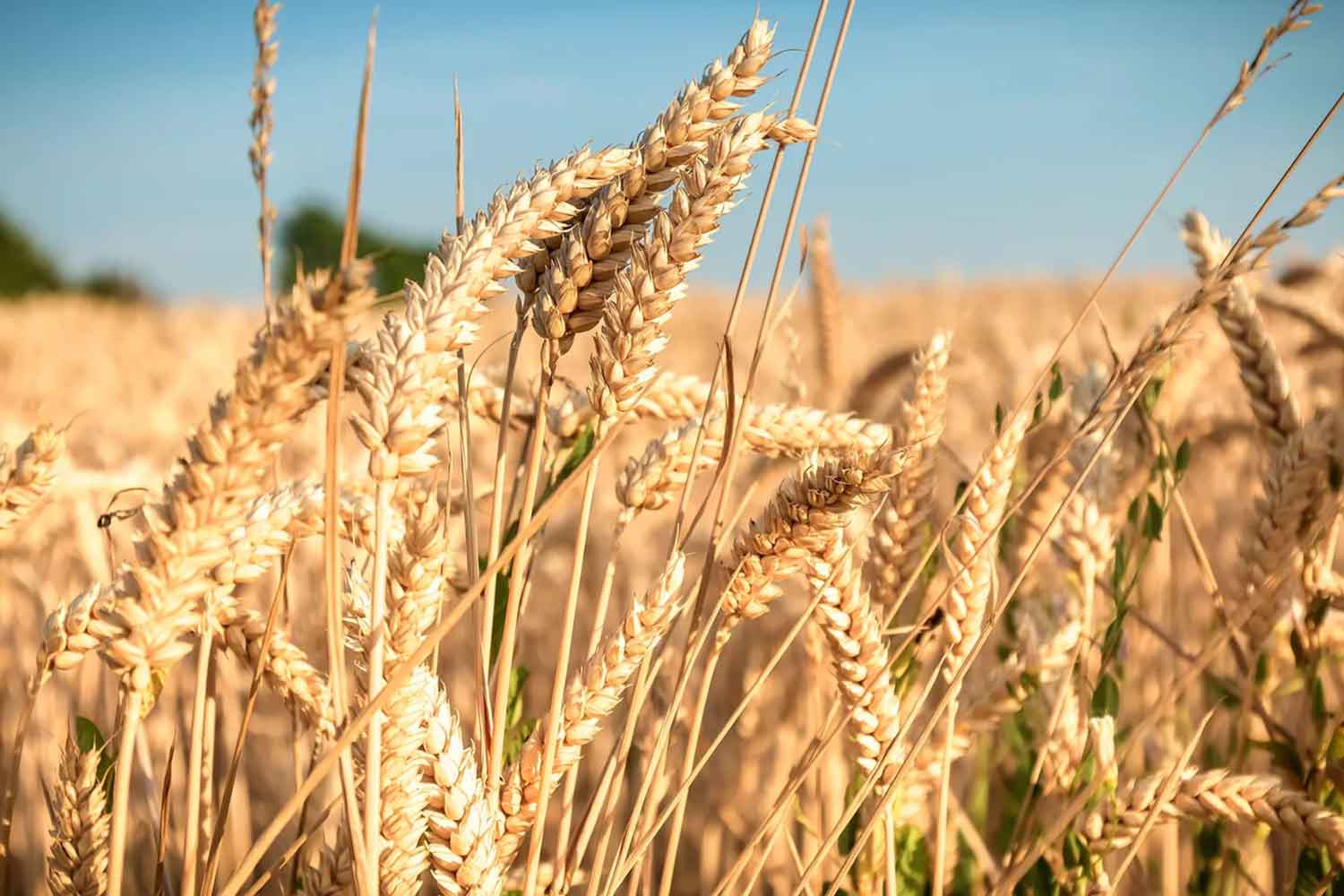
Besides hard wheat, there were several other staples in the Sicilian pantry, some of which include very typical Sicilian ingredients such as olives, olive oil, oranges, pistachios and saffron. Olive oil is a staple in the Mediterranean diet, so it is no surprise to see olive oil in this list. Interestingly, olive oil was actually not as prevalent in Sicilian cooking as it is today. In fact, animal fat and butter was still preferred during the Middle Ages. Olive oil was indeed expensive and during the Middle Ages, only the Jews consumed olive oil because pork fat was forbidden to them. Most outstanding in the Sicilian pantry staples list is actually the appearance of Saffron as it is not very common to see this ingredient in general Italian cuisine.
Even nowadays, the Arabian influence can be experienced most vividly in Palermo, or the Western part of Sicily. And it would be insufficient to mention Sicilian cuisine without mentioning Couscous. In this book, the author also includes a recipe called “Sicilian Fish Couscous” – which is a good representation of the culinary features in this part of Sicily, with fish and couscous. The author also stressed that the process of making couscous is very time-consuming and that the fish used to make the broth for the couscous should be “pesci del giorno” (catch of the day) to ensure the freshness and the quality of the fishes, expressing the variety of fishes that can be found in Sicily. It is also worth mentioning that the absence of antipasti in Sicilian meals is also attributed to the influence from Arabs. Although it is controversial to say Sicilians don’t eat antipasti, it is true that Sicilian appetizers or rather snacks (‘grape ‘u pitittu) are very much different from other parts of Italy.
Most Sicilian recipes, although using a variety of ingredients, share the same feature – not requiring professional cooking like French cuisine and mostly are home cooked recipes that the readers can recreate at home. As can be seen from the recipes, the main feature of Sicilian cooking is keeping it close to the kitchen garden, using diverse but simple and fresh ingredients. The concept of kitchen garden was developed during the Kalbite era of Muslim Sicily, evolving from the royal gardens of the caliphs used for decoration to a more prevalent and sophisticated form of garden that host a variety of new vegetables that eaten widely by the Sicilian poor.
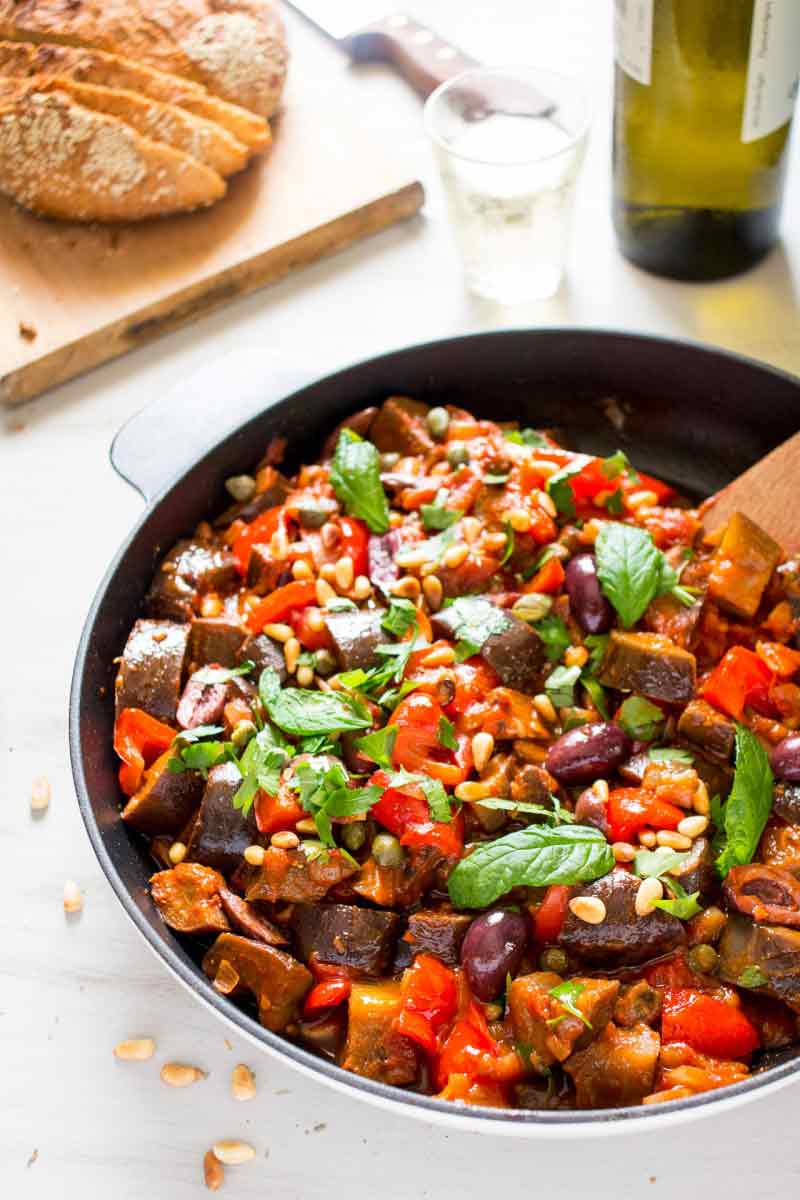
Aside from the Arabian influence, the Sicilian cuisine also reflects the culinary features of Spanish. This can be seen in one of the most typical Sicilian dishes – Caponata. Although it is believed to be influenced by Spanish due to the fact that its name being similar to the Catalan word “caponada”, some scholars argue that caponata was indeed a shipboard or inn food originally since the large amount of vinegar used in this recipe is for preserving the food for longer time. Regardlessly, despite it origin from other cuisines, it is undeniable that Caponata has become a representation of Sicilian food as it includes typical Sicilian ingredients such as eggplants, olive oil, capers using simple home-cooking techniques. Besides, caponata, the recipe for Sicilian Paella included in the book also reflects Spanish influence on Sicilian cuisine.
In conclusion, the Sicilian food landscape plays a pivotal role in Italian cuisine as it contributes several important Italian staples. However, on its own, Sicilian cuisine is definitely unique due to the combination of different influences and cuisines.
References
Wright, Clifford A. Did You Know: Food History - The Medieval Beginnings of Sicilian Cuisine. Accessed May 17, 2021.
http://www.cliffordawright.com/caw/food/entries/display.php/topic_id/13/id/35/.
About Clifford A. Wright. Accessed May 17, 2021. http://www.cliffordawright.com/caw/about.php.
Wright, Clifford A. Cucina Paradiso: the Heavenly Food of Sicily. New York: Simon & Schuster, 1992.